Wednesday, August 14, 2013

Arrival Has Never Been the Point

In his wonderful book, Naked Spirituality (see here), Brian McLaren writes about the repeated pattern of four seasons of life in God. Simply put, the four seasons are the following:

1. Simplicity - the spring season of spiritual awakening, the season of our "first love" when all is alive and prayers seem to be answered "beyond the statistical norm." "Our relationships in this stage tend to be dependent or even codependent; we need our in-group and its confident, charismatic leaders to know who we are and what we're about...This simple, dualistic faith gives us great confidence."

2. Complexity - the summer season of spiritual strengthening, a time of "hard work and getting things done during long sunny days". In this season we build on stage one with new skills in which we learn increasing independence. We move our focus from right-versus-wrong to effective-versus-ineffective. "To our core of dualism we now add a new layer of pragmatism" in which "good" people are identified less as the "correct" ones and more as the "effective" ones. We are not content to simply be with the right in-group; we want to be part of a winning team. The skills/practices we develop in this stage are 1) the ability to self-examine, 2) the habit of acknowledging our weaknesses and limitations and seeking wisdom and strength beyond our own, and 3) the ability to empathize with others in their pain.
3. Perplexity - the autumn season of spiritual surviving in which more important than being right or than being effective is being honest and authentic (brutally so). In this season we move from dualism and pragmatism to a relativistic and critical mindset. We are suspicious of the motives of leaders we used to admire. "If we acquired our faith in Simplicity or Complexity, we will probably doubt it now and may even abandon it for awhile. At the very least, we will need to add a margin for mystery and unbolt some of the structural elements of our faith that have been until now tightly fitted together..."
4. Harmony - the winter season of the nakedness/bareness of nature leading to new birth; in this stage all of the aspects of the previous stages come into harmony. "...the right-versus-wrong dualism of Simplicity, the effective-versus-ineffective pragmatism of Complexity, and the honest-versus-dishonest relativism of Perplexity are taken up and expanded into something bigger in the Harmony of stage four...If in Stage One we knew that everything was knowable, in Stage Two we knew that everything was doable, and in Stage Three we knew that everything was relative, now we in some way come to know with the old sage that 'everything is suitable for its time.' We can finally accept that all our knowing, past and present, is partial. Harmony requires this posture of humility, which allows us to finally see authority figures neither as godlike...nor as demonic..., but rather as human beings like us, often doing the best they can and even then making plenty of mistakes along the way..."

McLaren goes on to say that "Stage One orthodoxy now morphs into what some have called paradoxy - the realization that every true statement about God cannot fully contain the true majesty and wonder of God. This humility before God helps create harmony among all of us who believe in God, making it harder for us to maintain the old us-versus-them dualisms that have so often animated religious conservatives and liberals alike."

So does this mean we have now arrived? No...the season of Harmony opens into a new season of Simplicity and so on "in an ascending spiral of growth and discovery that continues as long as life itself. Far from feeling we have finally arrived, in Stage Four we finally begin to understand that arrival has never been the point."


Thursday, August 08, 2013

"Death to Self" and Becoming Who You Are

Having been raised and trained in the holiness stream of Christianity, I know the language of "death to self" well. There is truth to this, of course, but my own experience and the experience of many who I have listened to over the years who have come out of that world has taught me that, as is true of any slice of truth in God that becomes all of the truth, this language has become fraught with confusion and distortion.
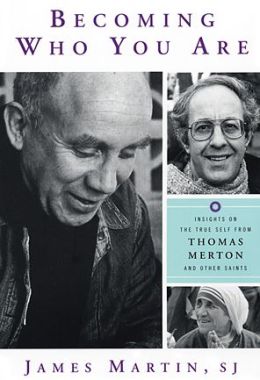
The following is a short quote from an article from Peter Enns' blog that is helpful along these lines. He is quoting from a book by James Martin, Becoming Who You Are (here).
"Martin explains by citing Merton...:
For me to be a saint means to be myself,…Therefore the problem of sanctity and salvation is in fact the problem of finding out who I am and discovering my true self” (p. ix).
These might be off-putting, even scary, words for those raised in a Christian faith where “we” are the problem that needs fixing. I mean, Jesus even said you have to lose your life if you want to find it.
But Merton is in fact saying just that. Note Merton speaks of “discovering my true self.” The true self is “the person we are before God and the person we are meant to be” (p. 18). The false self, by contrast, is “the person that we wish to present to the world, and the person we want the whole world to revolve around” (p. 19)"
To read the whole review of this book by Peter Enns, see here.

Monday, August 05, 2013

The Greatest Mistake...

I was away from home last week enjoying a few days of quiet and relaxation with a friend, and one day we visited a small town and looked around in a few little stores. I came across a greeting card with the following statement on the front of it:


"THE GREATEST MISTAKE YOU CAN MAKE IN LIFE IS TO BE CONTINUALLY FEARING YOU WILL MAKE ONE." - Elbert Hubbard


May we find the love of God so real that we begin to not fear making mistakes!

Saturday, July 27, 2013

God's Interpretation of Justice

Could it be that God views justice differently than we humans do? In his book, Unconditional?, Brian Zahnd says the following which is worth pondering carefully to get the implications:

"The cross is where justice is reinterpreted by mercy in order to be redefined as reconciliation. This alone is what God calls justice." 

Unconditional? is an excellent book on forgiveness. God bless you! 


Thursday, July 18, 2013

Two Ingredients in the Recipe for Ongoing Growth and Change

An observation I have been making in recent years is that one of the easiest things to happen to a Christian is to stagnate; we like to feel secure, and staying within the learned theological boundaries that have provided a sense of certainty (see "Sense of Security") is natural to us. We unwittingly end up placing our trust in our certainty rather than in the Person of God in Christ who is infinitely larger than our systems of belief. The Christian system in America contributes to this tendency to stagnate, because we've inherited and accepted the idea that being a Christian primarily means to adhere to a determined set of beliefs concerning God and that those beliefs should never change. (See recent post here.)  It's acceptable if we change within the boundaries of that prescribed belief system, but to venture outside of those boundaries in search for more truth is at best discouraged and at times punished.

I attended the wedding recently of two dear friends who I've spent a lot of time with in recent years. They asked if I would share a bit from my heart at the wedding, and as I pondered what to share, I thought of both of them, and it hit me that the two of them together have the ingredients for ongoing growth and change.

The bride is a beautiful young woman of sincere devotion to Jesus; the groom is a wonderful young man with sincere questioning about Jesus (and all the trappings that Christianity has added to Him). We have spent long hours in the past couple of years discussing anything and everything that we have had questions and doubts about; his bride-to-be would suggest once in awhile that we take time to pray and worship Jesus in it all.

I think the two of them represent two main ingredients needed for ongoing change and growth in God: 1) Sincere questioning of anything and everything about Jesus, sorting through what really is needed and disposing of whatever is hindering the true knowledge/experience of God in Christ; 2) Sincere devotion to Jesus, always keeping focused on what the "sorting through" is all about and not getting lost in the sorting. Without the sincere questioning, we easily get stuck in what we have been taught and there is always more to learn (and unlearn) of Jesus; without sincere devotion to Jesus, we can easily make the "sorting through" the goal.

With this in mind, I recommend some books below, two for the "questioning" ingredient and two for the "devotion" ingredient; I recommend the wonderful (and at times frightening) adventure of finding a trusted follower(s) of Jesus with whom you can safely discuss anything and everything while keeping clearly in view the ultimate and ongoing goal of encountering Jesus in truth and consequently becoming like Him. Depending on the lens you are looking through, some of this material will stretch your thinking; the wonderful thing is that you don't have to agree with everything an author writes in order to receive truth from him/her.

Books to help with the questioning ingredient:
A New Kind of Christianity
The Sacredness of Questioning Everything

Books to help with the devotion ingredient:
God's Favorite Place on Earth
The Only Necessary Thing


Wednesday, July 10, 2013

Getting Sheep to their Destination

I've become aware over recent years that we Christians generally seem to be pretty uptight people. There seems to be an underlying anxiety about most things in our life: worries about whether or not I'm praying or fasting enough, or whether my prayers are fervent or faith-filled enough, whether I'm doing enough for others, whether I'm in the will of God, or whether I'm giving enough, whether I'll miss "God's best", etc., etc.

I've spent my life in the holiness and missions world and like many in that world, the emphasis on "finding the will of God" for many years left me with a nagging fear that I might miss God's "highest" and end up living as a "second class citizen" of God's kingdom. I believe these kinds of fears have their roots in religious ideas that set up spiritual hierarchies and that put the weight of our salvation and sanctification on us, rather than on God.

When I look at the characteristics of sheep (see previous post here), I'm very impressed with the shepherd's love and care for the sheep and His ability to lead them (see here). My conclusion is that getting the sheep to a certain destination is much more about the shepherd's leadership than it is about what good followers the sheep are.

This is a source of joy and peace/relief to me when I start to go down the path of introspection, getting uptight and afraid that I'm not sufficient enough in this or that and worried that I've missed God's best or that I'm not going to make it in the end, etc, etc.  I can pause and look at the good Shepherd and how well He leads and how He is able to get us where He is taking us.

Jesus said, "Take my yoke upon you...my yoke is easy, my burden is light..." I do my small bit of agreeing to be with Him in the "yoke", and the weight of getting me (along with all His people) to where we are going falls on Him. This should make us the most joy-filled and peace-filled people on earth!

Saturday, July 06, 2013

Shepherd: the Sheep's Greatest Need

Earlier this week I posted a list of characteristics of sheep (here); it's easy to see why the sheep's greatest need is for a shepherd. Jesus calls us sheep, and He calls Himself the good shepherd. Following up from the characteristics of sheep, I will share a list of characteristics of the shepherd taken from here:

1. Loves his sheep and develops a close, intimate relationship with them so that they know his voice and trust him
2. Understands the needs of the sheep better than they do
3. Understands what threatens sheep and what makes them sick
4. Works tirelessly to provide protection and security
5. Leads them to fresh pastures and fresh water
6. Searches out sheep when they stray
7. Defends sheep against all their enemies
8. Provides protection while they sleep
9. Shears them and examines each one for injury or disease
10. Goes ahead of sheep and prepares the path
11. Disciplines and corrects them
12. Comforts sheep when they are hurt or fearful
13. Keeps sheep "on the move" so they don’t get into a rut
14. Liberally anoints them with oil to prevent disease or to heal an injury
15. Keeps sheep from fighting and from hurting each other
16. Cares for, loves sheep, and sacrifices his life for them
17. Rejoices in the health, well-being, and prosperity of his flock
18. Will leave the flock to search for lost sheep
19. Experiences great joy in finding lost sheep
20. Carries the lambs close to his heart
21. Gently leads those with young
22. Gets deepest satisfaction from seeing that sheep are contented, well-fed, and safe

Jesus Shows Us What God Prioritizes

Jesus said, 'When you see me, you see the Father'. Through his actions and words he was and is continually reinterpreting what we h...